
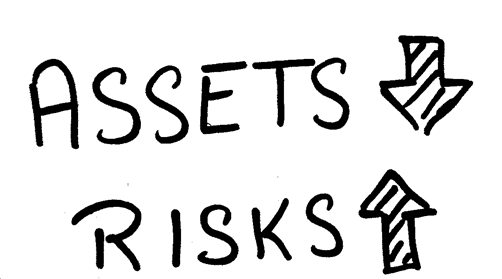
A key lever employed by Indian technology entrepreneurs for rapid growth has been an asset-light business model.
The journey of enterprises moving to an asset-light model has been evolving since the early 2000’s, when non-core functions such as accounts payable and payroll management were outsourced to cost-efficient service providers. This helped companies release expenses such as employee costs and infrastructure costs from their books.
In the next wave, technology companies started providing their solutions as services (example: printing-as-a-service) and leveraging cloud technologies. This helped customers move reduce assets and turn them into OpEx.
The following wave of asset-less business is probably the most drastic. A new breed of organizations started selling their solutions through digital channels, but they were not selling technology products (solutions to help you manage information better), but were providing platforms for sellers of tangible goods and services. Thus came companies such as e-commerce platforms (Flipkart), gig-economy based services (Ola, Swiggy), and platforms for other services such as ticket booking (Bookmyshow), hotel bookings (Oyo) etc.
Due to the lack of need for capital to grow an asset base, these companies have been able to scale up extremely fast. They are the apple of investors’ eyes due to their growth projections compared to traditional competitors.
But these companies are exposed to certain risks specific to the asset-less business model:
Low control over quality, since they do not directly own the assets and people providing the goods and services to their customers. However, low quality directly impacts their brand reputation.
Vulnerability of cost demands as well as vertical integration from suppliers. Netflix uses Amazon Web Services for hosting its content. Do you think Netflix has a risk of depending on a supplier that has its own competing service (Amazon Prime)?
As software development increasingly becomes faster and templatized, these companies face high competition due to the low market entry barriers. While network effect can help protect the companies once established, it is still a tough task to retain customers.
There are important lessons to be learnt from other industries that have tried being asset-light.
Maintain control of revenue generating operations. If the business model requires ownership of the assets for revenue generation to be out of your books, at least retain control through supplier lock-in.
Keep a close eye on supplier performance. Learn from how outsourcing deals for support functions are handled. Apply penalties for under-performance. Provide strong operational oversight on service levels.
Share financial risk with suppliers. Franchisee models are a good example.
In most cases, the cost benefits outweigh the risks of an asset-light approach. But considering the impact of the risks on the revenues companies are facing today, it is prudent to be more careful.
This article is based on the personal opinions of the author, and not representative of the views of his current or previous employers.
 The Business of Tech